





On 30 June, Keir Starmer unveiled Labour’s Defence Investment Plan, committing an additional £15 billion a year to defence spending and increasing the UK’s annual defence budget to £80 billion by 2029. Announced ahead of the July 2026 NATO Summit and building on the recommendations of the 2025 Strategic Defence Review, the plan marks one of the most significant increases in UK defence investment in decades.
Introducing Lord Robertson
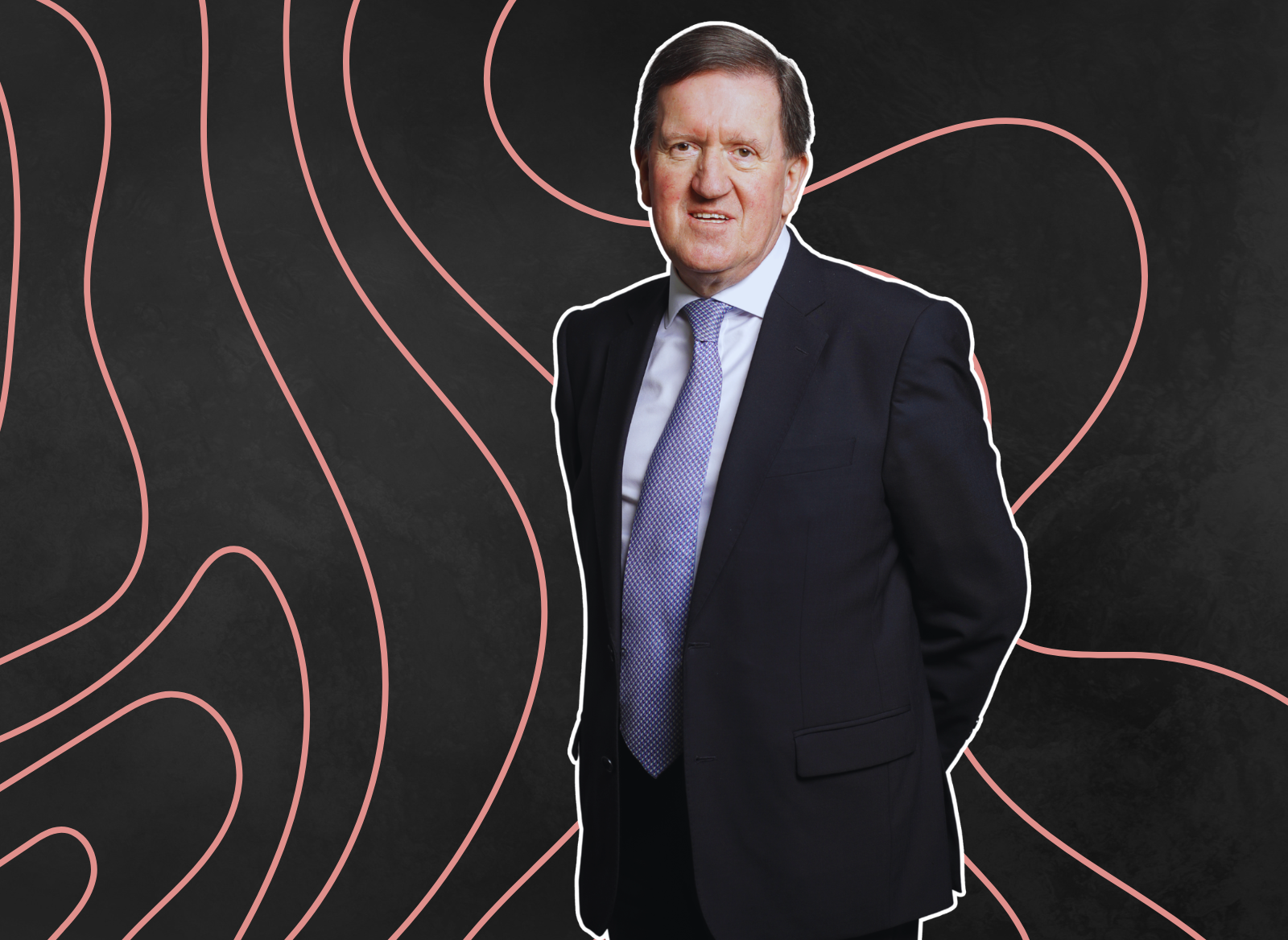
The principal architect of the 2025 Strategic Defence Review is Lord George Robertson of Port Ellen, who served as the review’s lead author alongside General Sir Richard Barrons and Dr Fiona Hill.
However, Robertson is no ordinary policy adviser. He has spent decades at the highest levels of British and international security policy, first as Defence Secretary under Tony Blair between 1997 and 1999, and then as Secretary General of NATO from 1999 to 2003.
It was in the latter role that Robertson found himself at the centre of one of the darkest moments in modern history. On 12 September 2001, just one day after the attacks on New York City and Washington, NATO invoked Article 5 of its founding treaty for the first and only time in the alliance’s history, declaring that an attack on one member would be treated as an attack on all. As NATO Secretary General, Robertson announced its later operational decision.
Less than a month later, the United States, supported by allies including the United Kingdom, launched military operations in Afghanistan under Operation Enduring Freedom, beginning what would become a two-decade occupation. As a consequence of that decision, millions of people would go on to be either directly or indirectly killed in the post-9/11 war zones. Robertson would go on to receive the US Presidential Medal of Freedom by President George W. Bush in 2003.
Given Robertson’s background, including as a senior advisor to Chatham House, it is perhaps unsurprising that Robertson has consistently argued for increased defence spending.
Yet another aspect of his career has attracted far less public attention.
The Cohen Group
Alongside his roles in government and international diplomacy, Robertson has also worked in the private sector. For years, he has worked for US-based consulting and lobbying firm The Cohen Group.
Founded by former US Secretary of Defense William S. Cohen, The Cohen Group is known for employing former senior military officials, defence policymakers, and industry executives, reflecting the close ties between government, military, as well as the arms industry and its lobbyists.
The Cohen Group’s website brags about its ability to assist aerospace and arms firms from around the world win deals.
‘We have helped firms from the US, Canada, UK, Europe, Turkey, Israel, GCC, India, Southeast Asia, and Japan to succeed in North America, Europe, the Middle East, India, Latin America, East Asia, and Southeast Asia. [The Cohen Group] has assisted clients to compete for and win tens of billions of dollars in contracts, to enter new international markets, to build joint ventures and other partnerships overseas, and to move up the supply chain’.
One of its roles is “understanding and intervening to beneficially affect political, legislative, and regulatory issues, including shaping public policy debates”…and…“securing public sector funding”, assuming this is from the defence sector.
That connection raises an obvious question: when one of the leading voices behind Britain’s call for higher defence spending has also spent years advising firms that stand to benefit from increased military procurement, where should the line be drawn between independent strategic advice and industry interests?
Starmer appoints
Following the election of the Labour government in 2024, Prime Minister Keir Starmer announced in July that a new Strategic Defence Review would be launched to reassess Britain’s military posture and long-term security priorities. The review was placed under the leadership of Lord George Robertson, who took a year-long leave of absence from his twenty-year advisory work to head the process.
Robertson’s appointment brought together a figure deeply embedded in both government defence policy and the international security establishment. A life peer in the House of Lords since 2000, he joined the Washington-based consulting firm The Cohen Group in 2004 as a Senior Counselor. The firm describes its work as advising and assisting global clients, including those in the defence and aerospace sectors, on strategy, markets and government relations.
The Strategic Defence Review
The Strategic Defence Review set out a series of major policy directions, including a “NATO First” approach, a shift toward higher readiness for warfare, and an emphasis on defence as an engine of economic growth. It also highlighted lessons drawn from the war in Ukraine as central to future planning, alongside calls for a “whole-of-society” approach to national security.
Among its recommendations were proposals for increased defence spending, expanded munitions production, larger missile stockpiles, a more submarine-focused naval posture, and a more technologically advanced and combat-ready army. The review also emphasised building long-term industrial capacity to ensure sustained readiness and rearmament capability.
The government later confirmed that it would accept all 62 recommendations contained in the review, as stated by then-Defence Secretary John Healey.
The Review pushed a broad strategic shift, with Robertson effectively using the Review to push the idea that Britain ‘move to warfighting readiness’, all the while drawing on the experience of those who have spent decades operating across both government and defence industry advisory networks.
Robertson getting fidgety
For Robertson though, the Review was the perfect platform to reduce the amount Britain spends on welfare and shift public money away from much needed human security needs towards the very arms companies he has long operated alongside. Most of these funds will be directed to US arms companies.
In an October 2025 House of Lords address connected to the Strategic Defence Review, he warned “that Britain is under attack, both at home and from abroad”.
In April 2026 – his tone more irritable – he went further, accusing Keir Starmer of “corrosive complacency” towards defence. In his speech he also said “We cannot defend Britain with an ever-expanding welfare budget”. A clear as day message – warfare not welfare.
In a later speech addressing the House of Lords in May while pushing the 5% NATO defence spending commitment, he bemoaned again that “the UK is already under daily attack”.
Lucrative influence
The desperation from Robertson for the UK to boost defence spending may have something to do with justifying his lucrative position at The Cohen Group, as well as who his colleagues are.
Although the annual fees are not publicly disclosed, another prominent figure at the Cohen Group is R. Nicholas Burns, the firm’s current Vice Chair. When Burns was nominated to serve as US ambassador to China in 2021, public financial disclosures revealed that he had been earning more than $415,000 annually from The Cohen Group.
The disclosure offered a rare glimpse into the lucrative compensation available within the consultancy’s ranks. Robertson, being another high profile figure for the group, would not be far off that now, perhaps even superseding this amount in 2026, his annual earnings from the group are not publicly disclosed but will no doubt be six-figures.
Furthermore, The Cohen Group’s associates move comfortably between government, lobbying and the arms industry; such as Charles W. Hooper, for instance, who sits on the board for General Dynamics, one of The Cohen Group’s largest backers.
Even more notable is Jim Mattis, one of the Cohen Group’s highest-profile figures. While serving on General Dynamics’ board between 2013 and 2017, Mattis received close to $1 million in compensation, including company stock. He then left to become Defense Secretary under Donald Trump, before returning to the private sector and joining The Cohen Group in 2019.
The concern
In 1968, a young George Robertson joined fellow Dundee students in a pitch invasion at St Andrews during a rugby match involving the Orange Free State team, protesting against apartheid.
Decades later, Robertson sits at the centre of Britain’s defence establishment while also serving as a senior adviser to The Cohen Group, a Washington-based consultancy working across the global defence industry.
That overlap has raised concerns about blurred lines between policymaker, lobbyist, and industry insider. Critics argue it creates a potential conflict of interest when the same figure helping shape national defence strategy is also embedded in a firm that operates within, and benefits from, the defence procurement ecosystem.
The question, for some, is whether a senior adviser linked to a US defence consultancy can be seen as a fully neutral architect of public defence policy.