





A nation’s security is often measured in terms of its military capability and by what it can deploy: fighters, frigates, and firepower. And while military readiness is essential to a state’s defence infrastructure, it is only half of the equation. True security is built on human foundations – accessible healthcare, economic stability, quality education, reliable public institutions and protection from violence. Where arms transfer governance meets these everyday needs is precisely where the true value of public policy is tested.
Security Trade-off?
In 2025, global military spending hit a record $2.8 trillion, a 2.9% real-terms increase marking the eleventh consecutive year of growth, with a 9.2% increase in the volume of international transfers of major arms in 2021–25, according to SIPRI. The global military burden amounted to 2.5% of world GDP, or $352 per person on earth. At the same time, the UN Secretary-General’s The Security We Need report estimates that the annual financing gap for achieving the Sustainable Development Goals (SDGs) has reached $4 trillion, with only one in five SDG targets currently on track.
This isn’t to say defense spending can simply be swapped for development overnight; national security remains a vital state responsibility. But it illustrates the opportunity costs of finite public resources and forces us to ask: what are we trading away? Redirecting 15% of global military spending would be sufficient to cover the annual costs of climate-change adaptation in developing countries. Even a fraction of current military expenditure could therefore strengthen primary healthcare, education, clean energy, resilient infrastructure and poverty reduction. For vulnerable communities, these trade-offs are a matter of survival. Unlike wealthier households, they have fewer means to compensate privately when public investment falls short.
Beyond the Price Tag: The Costs of Corruption
Corruption in arms procurement carries consequences beyond the value of an individual contract. It raises a wider question: how effectively are the costs and benefits of military expenditure serving the public? Defence deals are often exceptionally large, technically complex and conducted with a degree of confidentiality that can make external scrutiny difficult. When corruption enters this process—through bribery, undisclosed intermediaries, inflated prices or manipulated requirements— it distorts not only what a state pays, but what it ultimately receives. Such losses do not simply inflate a bill: they reduce competition, distort purchasing decisions, and result in lower-quality goods and services.
This matters because defence procurement is intended to translate public resources into security capabilities. A compromised procurement process can mean paying more for equipment, acquiring capabilities that do not meet operational requirements, or diverting resources towards systems selected for personal gain rather than legitimate security needs. Transparency International’s Defence & Security Government Defence Integrity Index found that 62% of the 86 countries assessed aced high to critical corruption risk in their defence sectors, with procurement identified as a key area of vulnerability. The opportunity cost is therefore not simply the amount lost to a bribe, but the security capability and wider public benefit that those resources could otherwise have produced. In this sense, corruption in arms procurement is not merely a financial or legal concern; it is a question of whether defence spending ultimately delivers the security for which citizens have paid.
Defence Procurement and the Indian Experience
India provides a useful case study of why procurement integrity matters as military expenditure expands. SIPRI estimates that India spent $92.1 billion on its military in 2025, an 8.9% increase in real terms, making it the world’s fifth-largest military spender. As the resources committed to defence grow, ensuring that procurement delivers the capabilities and value intended becomes increasingly important, coupled with the need for formal safeguards for effective implementation and oversight.
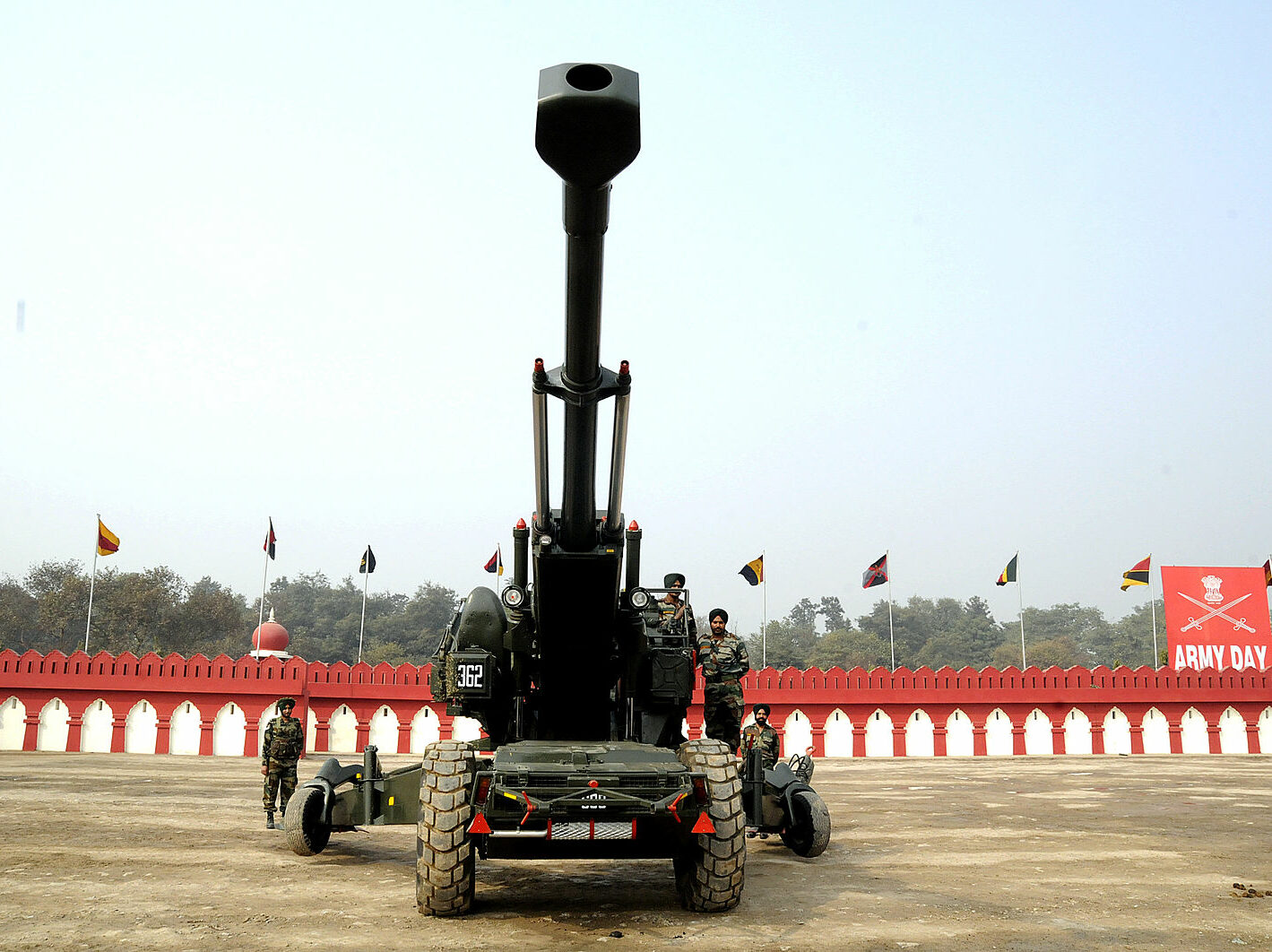
The Corruption Tracker’s database documents cases involving Indian defence procurement across several decades, and the Bofors scandal remains a key reference point to this day in Indian politics for debates about integrity. According to their investigation, in the 1986 contract for 410 FH77 155mm howitzers, Bofors paid tens of millions of dollars in commissions through intermediary networks and secret accounts. However, allegations that these payments were intended as bribes to Indian officials remain inconclusive. Further, the precise value of the alleged corruption has also remained disputed, with estimates varying substantially. The Corruption Tracker records this as a legal investigation that closed without an outcome.
The AgustaWestland case provides another illustration. The 2010 acquisition of 12 VVIP helicopters, valued at €556 million, was followed by allegations of corruption and manipulation of procurement requirements. Beyond the €51 million in alleged corruption via intermediaries, allegations focused on whether the helicopters met the operational requirements for which they were procured, specifically their ability to operate at the high altitudes required for the Himalayas. The contract was cancelled in 2013, with €228 million recovered for the three helicopters already delivered. Here, the concern extends beyond financial loss to questions about whether procurement decisions deliver the capability originally sought.
More recently, the Moog case shows that corruption risks remain prevalent within contemporary defence supply chains. The US Securities and Exchange Commission (US SEC) found that employees of Moog’s Indian subsidiary engaged in bribery between 2020 and 2022, generating at least $504,926 in illicit profits. As the parent company, Moog was held responsible for weak internal controls and inaccurate bookkeeping, and without agreeing or denying the findings, agreed to pay approximately $600,000 in disgorgement and prejudgment interest, along with a $1.1 million civil penalty.
Other cases documented by the Corruption Tracker, including the Rolls-Royce Hawk Jet deal, Barak 1 Missile deal, and allegations surrounding the Rafale fighter jet procurement, illustrate the range and complexity of corruption allegations associated with India’s defence market. Importantly, these cases have different evidentiary and legal outcomes and should not be treated as equivalent. Further, these examples should not be read as evidence that corruption defines India’s defence sector, nor that procurement reforms have failed. Rather, they demonstrate why integrity is itself a component of security. As defence expenditure grows, the question is not simply how much a country spends on security, but whether that spending consistently delivers the capability, value and public confidence for which it was intended.
From Bofors to the present: What has changed?
There is an important distinction between questioning defence procurement and questioning the integrity of defence procurement. The issue is not simply how much a country should spend on military capabilities, but whether the public receives the security for which it has paid. Countries with legitimate and complex security requirements need capable armed forces and effective defence institutions. But those institutions also depend on procurement systems that are transparent, competitive and resilient to corruption. Stronger oversight is therefore not necessarily in tension with national security; it can help ensure that security expenditure delivers the capabilities it is intended to provide.
India’s defence procurement landscape has come a long way since the shadows of the Bofors scandal, shifting from a system focused on post-facto damage control to one built on continuous accountability. A pivotal turning point came with the Defence Procurement Procedure (DPP) 2016, which significantly lowered the threshold for mandatory Pre-Contract Integrity Pacts from ₹100 crore to ₹20 crore. By introducing strict guidelines for financial penalties, suspension, and blacklisting of delinquent suppliers, the government established a far lower tolerance for misconduct during early bidding stages.
Building on this is the Defence Acquisition Procedure (DAP) 2020, which expanded oversight across every stage of the procurement lifecycle. While preserving the ₹20 crore Integrity Pact standard, DAP 2020 added measures including time-bound complaint resolution, enforced pre-approval vigilance checks for lowest bidders, and mandated more transparent competitive trials. Crucially, it recognized that integrity doesn’t end when a deal is signed. By establishing dedicated Project Management Units and formalized rules for inspections, contract amendments, and liquidated damages, it emphasised more transparent and competitive trials.
These reforms are particularly significant as India’s defence market becomes larger and more complex, involving domestic manufacturers, foreign suppliers, subsidiaries and other private-sector actors. Due diligence only at the moment of contract signing is no longer sufficient for modern military acquisitions. It requires controls throughout the acquisition cycle, from initial planning to post-contract delivery.
Conclusion
The trajectory from Bofors to the present is less about whether corruption has disappeared and more about institutional adaptation; a recognition that as defence procurement evolves, oversight mechanisms must evolve alongside it. The ultimate measure of security, therefore, is whether the process is sufficiently accountable to command public confidence, and whether the costs of security are distributed fairly across society. A secure state is not simply one capable of acquiring more weapons. It is one capable of demonstrating that the pursuit of security does not come at the disproportionate expense of those with the least capacity to absorb its costs.
By Monalisa Hazarika, Research Associate, SOAS University of London