





TL;DR
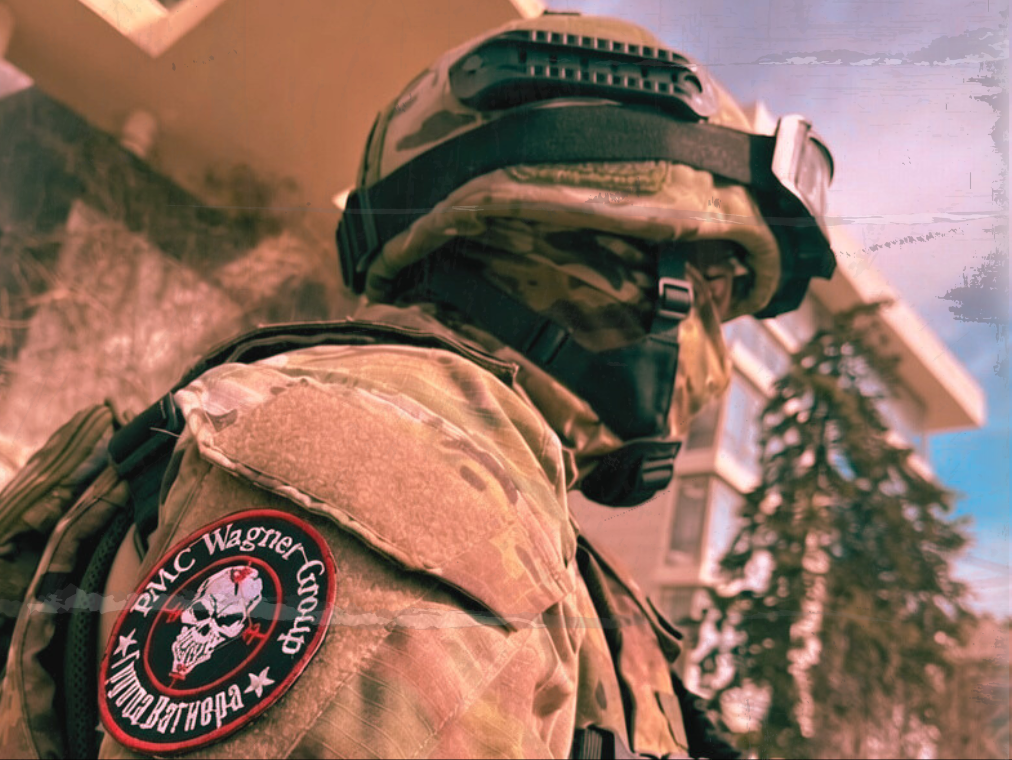
During its deployment in Sudan between 2017-2023, the Wagner Group’s role can be defined by its imperialistic bleeding of Sudanese gold, its training and arming of violent armed actors, and its illicit transfer of arms to the RSF which has systematically committed serious international crimes, including genocide.
Cautionary tales have long been sung of gold. Wars have been fought and genocides have been committed over its dominion. Blood-stained gold remains displayed in imperial metropoles. Certainly, its importance has not waned in the modern day, with use in several industries including jewellery, dentistry and electronics. Most significantly, gold is seen as an increasingly safe asset for central banks and private investors around the world, with the price of gold reaching record highs in January 2026.
Corrupt and violent practices remain key characteristics of the gold industry, most notably in regions where Artisanal and small-scale gold mining (ASGM) is found, which makes up to 15% of the world’s gold production. Trafficking, exploitation, environmental degradation, health implications for affected communities due to the use of mercury and cyanide in extraction techniques, child labour and sexual violence are known consequences of ASGM, in which up to 15 million people are involved globally.
An array of private, non-state and state entities find financial and political opportunity in such regions, where distinctions between licit and illicit markets are blurred. Cross-border criminal networks, corrupt political and military officials, militias and other armed groups are a number of agents that establish complex, often corrupt, transnational operations to gain, and maintain, control over gold mining and processing operations. Gold can easily be smuggled across borders and used anonymously as payment by actors wishing to trade outside of formal markets. Shell companies are routinely set up by foreign and domestic actors to ensure that gold can be smuggled out via porous borders, subverting democratic processes and oversight, with corrupt banking systems relied upon to launder consequent revenue streams.
Armed conflict is commonly found in areas where ASGM takes place. It may occur as a result of competing entities fighting to secure and/or maintain access to gold mining regions. Alternatively, revenue streams from illicit gold smuggling may function as a mechanism of financing and exacerbating ongoing armed conflict. As such, illicit gold mining operations routinely intersect with the arms trade, with actors involved relying on the illicit transfer of arms to sustain their activities.
The Wagner Group’s presence in Sudan serves as a case study in illustrating the intersection of corrupt resource extraction, illicit arms transfers, armed conflict and imperialistic power projection.
The Wagner Group as a Russian Foreign Policy Tool
Formed in 2014 during Russia’s illegal annexation of Crimea, the Wagner Group is understood to have been a web of businesses, front companies, personalities and mercenaries, which together functioned as a conduit of both the interests of its most senior ranking members and the foreign policy interests of Russia. The Wagner Group is known to have operated across a number of states, notably in Syria and several African countries.
For close to a decade, Russia denied that the group was affiliated to the state. This policy of denial, in addition to the Wagner Group’s decentralised M.O, allowed Russia to maintain a form of plausible deniability regarding the nature of the group’s presence in foreign states and their involvement in armed conflicts, helping to avoid subsequent legal accountability. However, following an ‘aborted mutiny’ led by the group’s leader Yevgeny Prigozhin in June 2023, Vladimir Putin formally acknowledged the group’s ties to the Russian Ministry of Defence (MoD), claiming that Russia ‘fully funds’ the group, providing the group with 86 billion Rubles between May 2022 and May 2023. Two months after the ‘aborted mutiny’, Prigozhin and other Wagner leaders died in a plane crash north of Moscow.
Between 2017 and August 2023, the Wagner Group enforced a variety of Russian strategic objectives in Africa. Such objectives included establishing close relationships with dictatorial leaders by embedding themselves as private security providers, providers of military training, arms traffickers, operators of mass disinformation campaigns and as enforcers of repression. The group also sought to secure access and control over the natural resources of such states including gold, diamonds, oil, gas, uranium and timber.
Increasing gold stockpiles became a central objective of Russia’s campaign to move away from economic dependency on economic systems based on the US Dollar. The state’s gold stockpiles have proven crucial in enabling Russia to partly subvert the economic impact of US and EU sanctions following its illegal annexation of Crimea in 2014 and invasion of Ukraine in 2022. Further, gold has been used as a means of funding Russia’s ongoing invasion of Ukraine and has served as a means of payment for weaponry including drones.
The scale of the Wagner Group’s financial contribution to this campaign, through its involvement in gold industries across several states, is disputed. Wagner found varying levels of success in different states, with some ventures far more profitable than others. The group frequently leased out concessions and permits its companies were awarded and relied heavily on artisanal miners. In addition, due to its operating in grey markets, payments were reportedly often delayed. Consequently, huge profits were by no means a certainty. Importantly, there was no guarantee that the gold hoarded by the group was funnelled to the state rather than remaining within the confines of the group.
Wagner Secures Concessions in Sudan’s Gold Industry, 2017-2019
Sudan’s multi-billion dollar gold industry had become of increasing importance to the country’s economy following South Sudan’s independence in 2011. Previously, oil was Sudan’s primary export, however 75% of all of historic Sudan’s oil reserves were found in South Sudan. As a consequence, Sudan’s leadership sought partners to oversee its rapidly expanding gold industry. With then President Omar al-Bashir facing an active ICC arrest warrant for his involvement in genocide and war crimes, and Sudan facing severe economic sanctions from the US, market options were limited.[1] Due to ASGM making up around 80% of total production, government oversight over production relied on tactics of violence and coercion enacted by varying armed actors.
Despite the US lifting decades-long sanctions on Sudan just weeks prior, on 23 November 2017 al-Bashir was flown in a Russian plane to Sochi to meet with President Vladimir Putin, Prime Minister Dmitry Medvedev and Defence Minister Sergey Shoygu. The meeting broadly focused on deepening security ties between the two countries with al-Bashir asking Russia for ‘protection from aggressive US actions’. al-Bashir discussed establishing Russian military bases on the Red Sea coast and purchasing Russia’s S-300 air defence system as well as Su-30 and Su-35 jets. However, discussions also focused on providing Russian companies with greater access to Sudanese resources, including the signing of several Memoranda of Understanding pertaining to the exploration of minerals, oil and gas, in addition to the development of nuclear power facilities.
As part of the negotiations, al-Bashir rewarded M-Invest, a company owned by Wagner leader Yevgeny Prigozhin,[2] with large concessionary mining rights in Sudan’s gold industry. Shortly thereafter, Meroe Gold Co. Ltd., was set up as a subsidiary of M-Invest in Sudan. Whilst such a relationship may appear licit, in practice the arrangement was defined by its quid pro quo nature with Sudan’s military elite, marking the beginning of a years-long relationship between the Wagner Group and Sudanese armed actors.
Per an investigation by the New York Times, Russian custom records show that Meroe Gold imported 131 shipments into Sudan over its first 18 months of operations. Shipments included mining and construction equipment, however also included the delivery of military trucks, amphibious vehicles and two transport helicopters.
An investigation by the Organized Crime and Corruption Reporting Project (OCCRP) found that in the months after Meroe Gold was set up, M-Invest agreed a 5-year deal with Aswar Multi Activities, a security firm with links to Sudanese military intelligence. Aswar received $100,000 a month from M Invest, in addition to $200,000 up front in ‘goodwill fees’. In exchange, Aswar was to ‘provide the necessary weapons and equipment needed by both parties through the Sudanese Ministry of Defense’, including armored vehicles, large-caliber weapons, drones and comms equipment. Bashir’s office waived the legally required 30% share owed to the Sudanese government of any foreign mining operation, and granted Meroe Gold licenses in three further gold-mining regions, waiving its rights once more. OCCRP also found that planes hired by Meroe Gold were also granted to fly under a Sudanese military signal code, consequently allowing transport to not be recorded on publicly available flight tracking websites.
Wagner mercenaries were involved in the oversight of key gold processing plants and mines held by Meroe Gold, including those in the town of al-Ibaidiya. Wagner’s presence in Sudan also extended to the provision of security to the al-Bashir government and the training of military and security forces. 20 Ural 4320s (6×6 trucks designed for the Russian military) were shipped to Meroe Gold on 25 May 2018 from Russia. An image was taken of one the trucks at an anti-Bashir protest in Khartoum December 2018, with another reportedly showing one of the trucks outside of a Meroe Gold facility. As hundreds of anti-government protests continued into 2019, the Wagner group was involved in designing disinformation campaigns for al-Bashir’s government to smear protestors as enemies of Islam, as thieves and as arsonists. Documents reportedly originating from M-Invest detailed a plan to violently crackdown on protestors, including discussing a ‘minimal but acceptable loss of life.’ al-Bashir’s government killed dozens of protestors and violently arrested thousands, with masked armed men deployed to crush the protests.
The Wagner Group During the Transitional Phase, 2019-2021
Wagner’s gold operations and its political relations to Sudanese armed actors would evolve after months of protest led to the April 2019 coup that ousted al-Bashir. The coup was enacted by the Sudanese Armed Forces (SAF) led by General Abdel Fattah al-Burhan and the Rapid Support Forces (RSF) led by Muhammad Hamdan Daglo ‘Hemedti’,[3] both senior ranking military leaders and former allies of al-Bashir. Russia’s intention is understood to have been to maintain strong relations with both the SAF and RSF, with both parties controlling key gold processing plants and gold-rich regions.[4] Senior Russian military officials flew in a jet linked to Prigozhin directly after the coup to meet with SAF and RSF leaders. The Wagner Group grew especially close with the RSF, having previously provided training for the group under al-Bashir’s government.
Immediately following the April coup, a 3-month state of emergency was imposed and overseen by the Transitional Military Council led by al-Burhan and Hemedti. Between 3 June and 18 June 2019, 120 protestors were reportedly killed by security forces, led by the RSF. On 5 June, Meroe Gold imported 13 tons of riot shields, helmets and batons for a company controlled by Hemedti’s family, highlighting how Wagner’s presence in Sudan and its gold operations were interwoven into the suppression of Sudan’s civilians. Hemedti’s family owned a number of companies, including al Gunade,[5] a key Sudanese mining conglomerate that controlled important gold mines and processing sites.[6]
In July 2020, Meroe Gold was sanctioned by the US for its ties to Prigozhin via M-Invest and its role in the suppression of Sudanese civilians. Consequently, a new front company, Al-Sawlaj Gold Mining Co,[7] was set up for Wagner’s gold mining operations in Sudan, reportedly purchasing the al-Ibaidiya plant from Meroe for just $1.8 million. A whistleblower from Sudan’s Ministry of Mining claimed that during a 2021 meeting between Russia’s Sudan envoy, Vladimir Zheltov, and the ministry, that Meroe Gold was to be ‘obscured’ following ‘too much US scrutiny’.
On 25 October 2021, the SAF and RSF terminated Sudan’s transitional civilian government, reimposed military rule and arrested political leaders including Prime Minister Abdalla Hamdok. Consequently, the US would freeze $700 million in economic assistance for Sudan. Hemedti would lead a delegation, including ministers, to the Kremlin in February 2022, ostensibly seeking to strengthen bilateral cooperation between Sudan and Russia, and discuss potential arms transfers.
Gold Smuggled Out, Guns Smuggled In: 2021-2023
Whilst Sudan’s civilians continued to fight for a power transfer to civilian rule, with many continued to be killed, injured and raped by security forces, the Wagner Group established a successful gold-smuggling operation, depleting the country of its resources and subverting government oversight.
An investigation by CNN found that at least 16 Russian gold smuggling flights had taken place out of Sudan between the beginning of 2021 and July 2022. The investigation suggested that evidence pointed to Wagner colluding with Sudan’s ‘military leadership’ to ‘enable billions of dollars in gold to bypass government oversight in exchange for political and military support’. Several points of transit for smuggled gold were identified, including planes leaving Port Sudan airport for Latakia in Syria, a key Russian military base, in addition to Khartoum airport. One customs official reportedly found 1 ton of gold onboard one plane they attempted to intercept before its departure in February 2022. Further, the investigation found that gold had been smuggled out of Sudan by land routes including via the Sudan/CAR border. Wagner boasted similar relations to CAR President Faustin-Archange Touadéra, providing personal security details and committing atrocities against protestors.
An anti-corruption taskforce set up by the government of Hamdok had been investigating such flights and the role of Wagner in the smuggling of Sudan’s gold. In September 2021, the taskforce provided evidence to Sudan’s armed forces of Meroe Gold’s transfer to al-Sawlaj, claiming it a ‘crime against the state’. The committee also criticised the military’s involvement in this process and reportedly were to publish a report on corruption in military-affiliated companies involved in gold smuggling. The taskforce would be dissolved by the new joint SAF/RSF leadership following the October 2021 coup, with the investigator’s offices raided, related documents confiscated and members later arrested.
Following the October coup, the Wagner Group would intensify its efforts to smuggle Sudanese gold out of the country. Between February 2022 and February 2023, the Wagner Group is estimated to have smuggled 32.7 metric tons of gold worth roughly $1.9 billion out of Sudan. However, the exact value of gold smuggled out of Sudan by Wagner remains unknown, mainly due to the informality of ASGM production and a lack of oversight of production and illicit markets. Officials from the Sudanese Central Bank have claimed that Sudan’s gold is smuggled to Russia via middlemen in the UAE and other countries.
At the beginning of 2023, as the potential of transition to civilian power diminished, and as tensions subsequently increased between the SAF and RSF, authorities linked to the SAF initiated investigations into gold smuggling networks. Reportedly, at least 58 Al-Sawlaj employees were investigated in early 2023. Roughly three dozen of the employees were Russian, including the national and security manager of Al-Sawlaj, who was investigated on the grounds of having smuggled several kilograms of gold.
Tensions would continue to increase between the two factions, ultimately contributing to the outbreak of civil war between the RSF and SAF in April 2023. Much of the war was centred around the RSF and SAF battling for both political supremacy and supremacy over the country’s resources. Both parties regarded Sudan’s gold reserves as a source to fund their war efforts. Within the first two months of the war the RSF captured Sudan’s currency printing house and the Sudan Gold Refinery in Khartoum. The refinery is estimated to have possessed 1.3 tonnes of unrefined gold valued at $150 million.
The war threatened Wagner’s gold mining operations and reports emerged that al-Sawlaj had shut down production due to the war in September 2023. Trade records obtained by C4ADS show that around 10 June 2023, two vessels transported 6 shipments which included sodium cyanide, pumps for liquids, and electric motors and generators to Al-Sawlaj Mining in Sudan from Qingdao Port, signalling that production may have continued for a time after the onset of war.
Having initially operated in Sudan as a deliverer of training to security forces whilst securing access to Sudan’s gold, the group’s role in Sudan evolved to that of facilitator of the RSF’s war efforts, facilitated through its transnational arms smuggling network. The Wagner Group provided the RSF with arms and fuel across a number of land borders from states where Wagner was also present, including Libya, CAR and Chad. As of March 2023, Wagner had 2,000 mercenaries in Libya and 1,500 in CAR. Though making no explicit reference to the Wagner Group, the UN Panel of Experts on the Sudan found that the RSF takeover of Sudan relied on three lines of support, namely; ‘Arab allied communities, dynamic and complex financial networks, and new military supply lines running through Chad, Libya and South Sudan’.
Per a CNN investigation, Wagner supplied the RSF with surface-to-air missiles via Ilyushin Il-76 military transport planes that had shuttled between Wagner’s al-Khadim airbase in Libya and Russia’s military base in Latakia in Syria just days before the war began. The operation was facilitated by Libyan general, Khalifa Haftar, both an ally of Wagner and the UAE. From Libya, Wagner has also smuggled fuel to the RSF, a critical resource for the militia which relies heavily on the use of 4×4 trucks.
Russia is known to have been an important source of arms for both the RSF and SAF. An investigation by Amnesty International found that thousands of weapons were shipped to Sudan after 2019, including the Saiga-MK. 223 Rem and Tigr Designated Marksman Rifles (DMR), which have since been used by both parties in armed conflict. Amnesty found Tigr DMR’s to be ‘ubiquitous in the ranks of both the RSF and the SAF, almost everywhere in Sudan’.
Whether arms provided from Wagner or the Russian state were definitively used to facilitate serious international crimes is unconfirmed. However, the scale of atrocities committed by the two parties is staggering, with both the RSF and SAF found by the UN to have intentionally targeted civilians, outlining the possibility that such arms may have been used in facilitation of such crimes.
The RSF has been accused of systematically violating IHL, including the targeting of gathering sites for Internally Displaced Persons (IDPs), civilian neighbourhoods and medical facilities, and committing sexual violence against women and girls. The group has repeatedly been accused of genocide. A UN fact-finding mission investigated the RSF’s crimes in extensive detail, finding that war crimes, crimes against humanity and ‘hallmarks of genocide’ against the Zaghawa and Fur communities had taken place.
‘Post-Wagner’: Russia Remains in Sudan
Following Prigozhin’s death in August 2023, the role of Wagner in the smuggling of Sudan’s gold changed. Many entities within the group were broadly assimilated into the Russian MoD, and actors and organisations overseeing its strategic objectives in Africa would come under administrative control of the MoD’s ‘Africa Corps’. However, the elements that made up Wagner’s operations would largely remain consistent under the umbrella ‘Africa Corps’. 70-80% of its personnel are former Wagner members per Wagner-linked Telegram chats.
An investigation by CNN found that in September 2023, weeks after Prigozhin’s death, Wagner forces continued to operate in Sudan. The group reportedly facilitated a large arms convoy to Sudan via an RSF garrison in al-Zurug, near the border to Chad and Libya, according to a ‘high-level Sudanese source’.
It should be stated that the Wagner Group was only one source of arms and logistical support for the RSF, with a majority of arms being provided through illicit channels linked to the United Arab Emirates, which is also the primary destination for legal and smuggled Sudanese gold. According to an investigation by specialists at the Global Initiative against Transnational Organized Crime (GI-TOC), the UAE collaborated with the Wagner Group in facilitating an illicit transnational supply chain network to facilitate arms deliveries to the RSF. According to GI-TOC researchers, local sources claim Emirati planes with military equipment would land in Bangui, CAR, with equipment then transported by Wagner via helicopters and military aircraft to Birao, CAR, then on to the RSF in Sudan.
Footnotes
[1] Russian-owned firm Kush Exploration and Production Co.Ltd (Kush E&P) began operating in Sudan in 2015 as part of a gold mining venture firm Alliance for Mining. Alliance for Mining is a subsidiary of a Dubai-registered company, Emiral Resources, a Russian-Emirati company founded by former Russian diplomat Boris Ivanov.
[2] For years, Prigozhin denied any link to the Wagner Group, only admitting that he founded the group in September 2022.
[3] The RSF’s origins are in the ‘Janjaweed’ militias deployed by al-Bashir during the 2003-04 Sudanese genocide. Hemedti was one of the leaders of the ‘Janjaweed’ who committed mass atrocities, including the systematic killing of the Fur, Masalit and Zaghawa ethnic groups, the systemic use of rape as a tool of genocide, mass sexual mutilation, and the bombing of civilian villages.
[4] Russian state-owned exploration company Rosgeologia signed an Agreement of Intent with the Republic of Sudan in October 2019 to explore mineral deposits in the Nile Basin.
[5] Also spelled al-Junaid or al Junaid Multi Activities Co Ltd, Hemedti reportedly sat on the Board of directors of al Gunade. Kush E&P stated in 2018 that it was partnered with al Gunade working in the north area of Kadugli. Local gold miners have claimed that RSF militants in Land Cruisers had previously driven them away from the mines in September 2018 due to the mine being owned by a foreign mining company, namely Kush E&P.
[6] Hemedti was awarded the Jebel Amer mine in 2017 by al-Bashir, which he would subsequently relinquish to the civilian-military government through his position on the Council in exchange for $250 million in government payments and tax exemptions for other RSF-affiliated companies. He would use this money to fund other RSF gold operations throughout Darfur State.
[7] Also spelled al-Solag.