


Case File
The BAE Systems Tanzania Radar Case


Contents
Introduction
Introduction
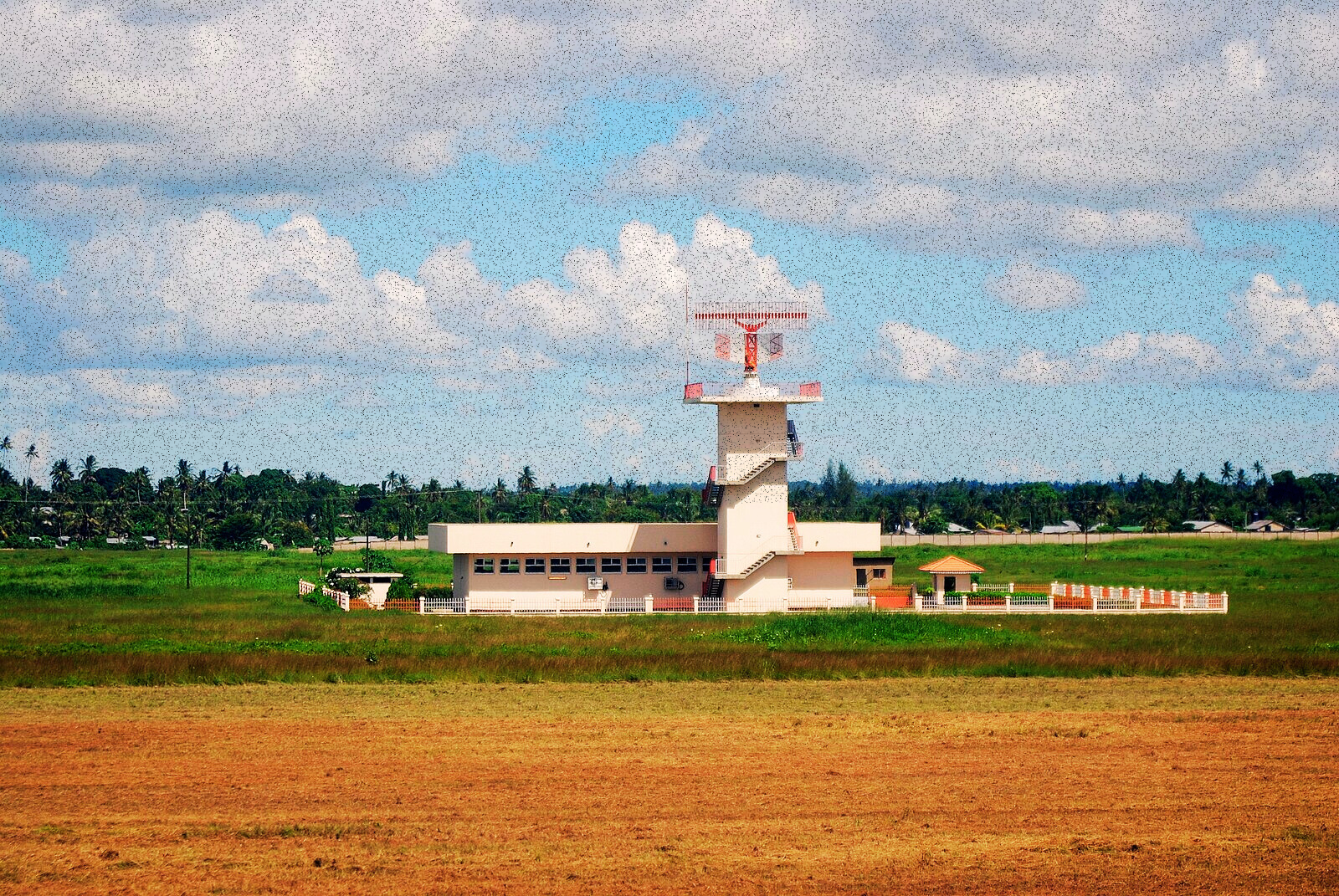
contentsOf the many cases of alleged bribery that BAE Systems, the United Kingdom’s leading arms company, was accused of over the last decades, only one survived political interference and finally made its way to a UK court. In 2001, the company had signed a contract with Tanzania to supply two ‘Watchman’ radar systems to monitor the country’s airspace for a cost of $40 million. The deal was controversial even before its finalisation, with the World Bank and International Civil Aviation Organization warning that the Watchman, primarily a military radar, was over-priced and ill-suited for use as a civil air traffic control system. The British cabinet split publicly over whether to grant an export license for the radar system, but the sale was ultimately approved with the support of Prime Minister Tony Blair. Investigations revealed that BAE had paid $12.4 million to an agent, almost certainly to be distributed in bribes to Tanzanian officials, to secure the deal.
Case Details
Case details
contentsSeller country
United Kingdom
Seller company
BAE Systems
Buyer country
Tanzania
Goods category
Surveillance Equipment
Equipment sold
2 Watchman Radar Systems
Deal value
$40 million
Sum involved in corruption
$12.4 million
Start year
1992
End year
2010
Outcome status
Out of Court Settlement
Actors
Actors
contentsSailesh (or Shailesh) Pragji Vithlani – Intermediary working first for Siemens Plessey, the manufacturer of the Watchman, and later its new owner, BAE Systems; suspected of paying bribes to Tanzanian officials; later charged in Tanzania with perjury; fled the country.
Tanil Kumar Chandulal Somaiya – Intermediary and business partner of Vithlani; held power of attorney over company used to transmit bribes.
Andrew John Chenge – Attorney General of Tanzania (1993-2005) at the time of the arms deal, subsequently Minister of Infrastructure (2006-2008) and MP for Bariadi West (2005-2020); signed off on the terms of the loan which financed the purchase; suspected as a receiving bribes; resigned in 2008 from position as minister of infrastructure.
Idriss (or Idrissa) Rashidi – Governor of the Bank of Tanzania (1993-1998); signed off on the terms of the financing loan; suspected as a receiving bribes.
Richard “Dick” Evans - CEO of BAE Systems (1990-1998) and later Chairman (1998-2004), remaining as an advisor to BAE Systems, particularly on Saudi Arabia until 2009; according to sources, he signed off on using middleman Vithlani in the deal.
Red Diamond - Shell company operated by BAE Systems; allegedly a conduit for $12 million worth of bribe payments to Swiss bank account controlled by Vithlani; registered in the British Virgin Islands.
Merlin International Ltd - Shell company controlled by Vithlani; received a total of $400,000 in installments directly from BAE Systems; registered in Tanzania.
Timeline
Timeline
contents1990
- Tanzania recognised that it needed modern air traffic control radar since at least 1990, when coverage failed over the capital Dar es Salaam.
1992
- 5 AugTanzania launched a search for a new supplier for a radar system that would meet the country's requirements.
- Between October and November, the government floated tenders shortlisting, with eight companies invited to present their bids, including Marconi Radar System of the UK, Thomson CSF of France, Westinghouse of USA, and Siemens Plessey (now BAE Systems).
1993
- JulSiemens Plessey was recommended for the purchase and they officially submitted its whole programme of manufacturing the equipment and purchase procedures.
1994
- JunAfter lengthy discussions, the deal was in place, with an initial estimated cost of $88 million.
- Bankers Trust offered to hold the entirety of the country’s gold reserves as security over a ten-year period while Tanzania paid off the radar system using future cash generated through gold exports; negotiations foundered, however, over the objections of the Tanzanian Central Bank.
1995
- 11 FebThe Treasury and the Central Bank confirmed that the terms of the project were not against the conditionalities of the Enhanced Structural Adjustment Facilities and Policy Framework Paper (ESAF/PFP) agreed upon between the Government and the International Monetary Fund (IMF) and the World Bank (WB).
1997
1999
- Tanzania and BAE Systems finalized a deal for the sale of two Watchman radar units, commonly used for both military and civil air defence purposes, at the price of $40 million, with the help of a commercial loan from Barclays Bank. This loan was offered at rates lower than normal for commercial debt, but far above those typical of a financial assistance package for developing countries. Tanzania claimed at the time that increased air usage taxes would net the country several million dollars in additional revenue each year.
2000
- BAE applied for two export licences for the system.
2001
- FebA World Bank report was released, which concluded that the system offered poor value for money and was unsuitable for Tanzania’s needs. The World Bank subsequently asked the International Civil Aviation Organisation (ICAO) for a more detailed report.
- NovTanzania was granted USD 3 billion in debt relief by international donors. The World Bank and IMF, as a condition of debt relief, required Tanzania to allow the two institutions to review the acquisition of the air traffic control system.
- NovThe ICAO report raised concerns about the project and recommended a further report.
- 20 DecThe export licence was approved by the Department of Trade and Industry. The decision to grant the license was condemned by the IMF and World Bank relying on advice from the ICAO, as the contract was not justified under Tanzania’s debt relief arrangements, effectively increasing the country's debt even further. The European Investment Bank was also prepared to offer a cheaper loan for a civilian alternative. Nonetheless, after the British cabinet approved the export license for the Watchman units, Tanzania opted to continue with the original program.
2002
- FebThe UK decided to withhold £10 million in budget support from Tanzania because of concerns about the purchase.
- MayThe second ICAO report raised further concerns about value for money and the balance between civilian and military use.
Outcomes
Investigation Outcomes
contents2002
- The air traffic control deal was controversial from its very beginnings, and the UK secretary for international development, Clare Short, suggested that the project was corrupt.
2003
- 12 MayClare Short resigns from government over the Iraq war.
2004
- JulThe UK’s Serious Fraud Office (SFO) began investigating a set of BAE’s sales, including the Al-Yamamah Arms Deals.
2006
- The SFO confirmed it was looking into the Tanzanian radar deal specifically.
2007
- 15 JanA journalist claimed to have extracted a candid confession from Sailesh Vithlani, BAE System’s alleged agent, of acting as an intermediary for the payment of $12 million in bribes for the radar deal. BAE Systems covertly transferred US$12 million into a Swiss bank account, from which the funds were allegedly channelled into Tanzania and distributed as bribes.
- In his testimony, Vithlani's business associate, Tanil Somaiya, explained that BAE had established two separate financial arrangements with the intermediaries involved in the deal. The first was a standard agency contract, which provided for a 1% commission if the US$40 million radar sale was completed. These payments were directed to Merlin International Ltd., a company registered in Tanzania. According to Somaiya, Vithlani held the controlling stake in Merlin, while Somaiya himself owned only a nominal share. As the radar system was supplied, BAE reportedly paid a total of $400,000 to Merlin in installments under this agreement.
- Alongside this formal arrangement, Somaiya described a second, far less conventional mechanism. BAE allegedly used its covertly controlled offshore company, Red Diamond, to transfer a further US$12 million - equivalent to 30% of the contract value - into a Swiss bank account over which Vithlani exercised personal control. Tanzanian police sources later claimed that the decision to appoint Vithlani as BAE's agent had received approval from the company's then chairman, Sir Dick Evans.
2008
- 21 MarAccording to a request for mutual legal assistance sent to Tanzanian authorities, the SFO suspected that Vithalni had received 30% of the value of the radar deal from BAE through companies registered in tax havens. The two Tanzanian officials named by the SFO in its investigation as likely bribe-takers were Andrew Chenge, the attorney general, and Idriss Rashidi, formerly the governor of the Bank of Tanzania. Chenge was a key decision-maker in the negotiations because his signature was required to meet Barclays Bank’s demand that disputes arising from the commercial loan be adjudicated under English law. He allegedly received USD 1.5 million for his support.
- After the request for assistance was leaked, Chenge stepped down from his new role as minister of infrastructure. In fact, the Prevention and Combating of Corruption Bureau (PCCB) of Tanzania was already pursuing its own case against Vithlani and at least one other figure as early as 2007, according to U.S. diplomatic cables released by the Wikileaks website. Political pressure, however, appears to have suppressed the investigation.
2009
- 1 OctThe SFO announced that it intended "to prosecute BAe Systems for offences relating to overseas corruption . . . in Africa and Eastern Europe".
2010
- 5 FebThe SFO announced a plea bargain settlement under which BAE would plead guilty in court only to "accounting irregularities" in its 1999 sale of a radar system to Tanzania and would pay penalties of £30 million. The SFO would not bring prosecutions relating to alleged bribery and corruption in BAE's arms deals elsewhere, including those in the Czech Republic, South Africa and Romania.
- 23 NovThe SFO took BAE Systems to court, and settled for a plea bargain with the defendant. The company admitted to an accounting wrongdoing stemming from its misleading description of the payments to Vithlani as “technical services.” The SFO did not attempt to establish that Vithlani had paid the money onward as bribes, or that any of the monies were otherwise improperly used.
- 20 DecIn the course of the trial, the presiding judge stated that it was “naïve in the extreme” to believe that BAE Systems had not committed bribery and was “astonished” that the SFO had not been able to present evidence to support a charge.
- 21 DecBAE Systems was sentenced for concealing that it was making payments to a Tanzania-based agent "with the intention that he should have free rein to make such payments to such people as he thought fit to secure the radar contract” for BAE from the government of Tanzania. BAE Systems agreed to pay a token fine of £500,000, and to make an ex-gratia payment of £29.5 million to the Tanzanian people. In exchange the SFO pledged to drop all of its investigations into the company’s past potential wrongdoings in this and other cases. The Campaign Against the Arms Trade and The Cornerhouse unsuccessfully brought a legal case alleging that the SFO should have charged BAE Systems with corruption. Initially, the vague wording of the settlement allowed BAE to pay this donation in any way they saw fit, but following objections in Parliament, the donated funds were placed under the management of the Department for International Development.
2012
- 15 FebThe money was eventually paid out to fund education programs in Tanzania.
2016
- JanThe Tanzanian investigation has not yet led to the prosecution of any bribe-takers, and Andrew Chenge continued serving in parliament. Beginning of 2016 he was elected as the legislature’s chairman. Vithlani faces charges of perjury in Tanzania, and was at one point - but no longer - listed as a wanted man by Interpol.
- JulTanzania’s Civil Aviation Authority announced that it was looking to purchase a new radar system for the airport at Dar es Salaam and was likely to spend between TZS 12 and 16 billion ($5-7 million) on the acquisition.
2017
- 22 AugTanzania Civil Aviation Authority signed a deal with Thales Air Systems for TZS 61.3 Billion, ($27.5 million) to install radar systems at four airports. The Thales group is owned partly by the French state and Dassault Aviation, meaning that BAE systems lost the Tanzania contract.
References
References
contentsAfrica Confidential. "The radar scandal is back", 22 July, 2011. http://www.africa-confidential.com/article/id/4106/The_radar_scandal_is_back
All Africa. "Tanzania: BAe Licence Granted But Issue Not Closed", 27 December, 2001. http://allafrica.com/stories/200112270004.html
All Africa. "Tanzania: Debt and Corruption in Tanzania", Africa Research Institute (London), 11 February, 2016. http://allafrica.com/stories/201602120817.html
Campaign Against Arms Trade. "Legal challenge to blanket immunity given to BAE Systems", 10 January, 2011. https://caat.org.uk/news/2011-01-10-2/
Clare Short. "Clare Short’s letter of resignation from the Cabinet", 12 May, 2003. https://www.clareshort.org/letters/clare-short-cabinet-resignation
Creamer Media’s Engineering News. “World Bank critical of Tanzania air traffic plan”, 17 June, 2002. http://www.engineeringnews.co.za/print-version/world-bank-critical-of-tanzania-air-traffic-plan-2002-06-17
David Hencke, “World Bank could bar £28m Tanzania air traffic deal”, The Guardian, 21 December, 2001. https://www.theguardian.com/world/2001/dec/21/politics.tanzania
David Leigh, and Rob Evans. "BAE's secret $12m payout in African deal", The Guardian, 15 January, 2007. https://www.theguardian.com/world/2007/jan/15/bae.armstrade
David Leigh, and Rob Evans. "Serious Fraud Office backs £30m BAE plea bargain despite opposition", The Guardian, 1 April, 2010 . https://www.theguardian.com/business/2010/apr/01/serious-fraud-office-bae-plea-bargain
David Leigh, and Rob Evans. "SFO seeks BAE prosecution over bribery claims", The Guardian, 1 October, 2009. https://www.theguardian.com/world/2009/oct/01/bae-sfo-bribery-allegations-prosecution
David Leigh. "Fraud Office inquiry into BAE Tanzania deal", The Guardian, 13 November, 2006. https://www.theguardian.com/politics/2006/nov/13/armstrade.foreignpolicy
David Leigh. “The arms deal, the agent and the Swiss bank account,” The Guardian, 15 January, 2007. https://www.theguardian.com/world/2007/jan/15/bae.freedomofinformation
Jonathan Russell. "BAE pays fine to settle Tanzania corruption probe", The Telegraph, 21 December, 2010. http://www.telegraph.co.uk/finance/newsbysector/industry/defence/8216551/BAE-pays-fine-to-settle-Tanzania-corruption-probe.html
Laurence Cockcroft, "Corruption and the State: Introduction", Soundings, Issue 7, Autumn 1997. https://banmarchive.org.uk/soundings/soundings-issue-7-autumn-1997/corruption-and-the-state/
Mark Tran. "BAE finally pays out £29.5m for educational projects in Tanzania", The Guardian, 15 March, 2012. https://www.theguardian.com/global-development/2012/mar/15/bae-pays-for-tanzania-education-projects
Paul Redfern, “Tanzania: Short ‘Lobbying Against Dar,’” All Africa, 20 May, 2002. http://allafrica.com/stories/200205200230.html
Sam Perlo-Freeman. "Al Yamamah Arms Deals", Corruption Tracker, updated 18 April, 2023. https://corruption-tracker.org/case/al-yamamah-arms-deals
Serious Fraud Office. “Supplemental Request For Mutual Legal Assistance”, 21 March, 2008. http://www.thecornerhouse.org.uk/sites/thecornerhouse.org.uk/files/sfo-tanzania-request_0.pdf
Tagesspiegel. “Business: Siemens sells arms business”, 30 October, 1997. https://www.tagesspiegel.de/wirtschaft/siemens-verkauft-rustungsgeschaft-562789.html
The Citizen. "Tanzania to take full control of its airspace", updated 16 April, 2021. https://www.thecitizen.co.tz/tanzania/news/national/tanzania-to-take-full-control-of-its-airspace-2601186
The Corner House. "BAE pleads guilty to minor accounting offence in Tanzania radar scandal". 23 November, 2010. http://www.thecornerhouse.org.uk/resource/bae-pleads-guilty-minor-accounting-offence-tanzania-radar-scandal
The Corner House. "BAE-Tanzania-SFO plea bargain settlement". https://www.thecornerhouse.org.uk/background/bae-tanzania-sfo-plea-bargain-settlement
The New Humanitarian, "BAe licence granted but issue not closed", 27 December, 2001. http://www.irinnews.org/report/29316/tanzania-bae-licence-granted-issue-not-closed
UK Parliament. “Communiqué issued by the Ministry of Communications and Transport of the United Republic of Tanzania”, Select Committee on Foreign Affairs, 21 January, 2002. https://www.publications.parliament.uk/pa/cm200102/cmselect/cmfaff/718/718ap09.htm
UK Parliament. “Financial Crime and Development”, International Development, 20 July 2011. https://www.publications.parliament.uk/pa/cm201012/cmselect/cmintdev/writev/847/br05b.htm
UK Parliament. “Sale of Radar System (Tanzania): Volume 456", House of Commons, 30 January, 2007. https://hansard.parliament.uk/commons/2007-01-30/debates/07013072000001/SaleOfRadarSystem